Lavender, with its delicate fragrance and charming purple blooms, has the power to transform any garden into a tranquil oasis. To ensure that your lavender plants remain a source of beauty and vitality, the practice of deadheading becomes an essential tool in your gardening arsenal. By removing spent flowers, you not only encourage new growth and extended blooming but also enhance the health and appearance of these lovely plants. In the following sections, we will guide you through the step-by-step process of deadheading lavender, unlocking the secrets to maintaining a thriving lavender patch that continues to captivate the senses and soothe the soul.
Step 1: Choose the Right Time Timing is crucial when it comes to deadheading lavender. Wait until the flowers have fully bloomed and started to fade, but avoid waiting too long when the blooms begin to wither and produce seeds. Aim to deadhead your lavender plants as soon as the majority of the blossoms on a stem have lost their vibrant color and are beginning to decline.
We love these Fiskars Micro-Pruning Shears (5k+ reviews on Amazon)
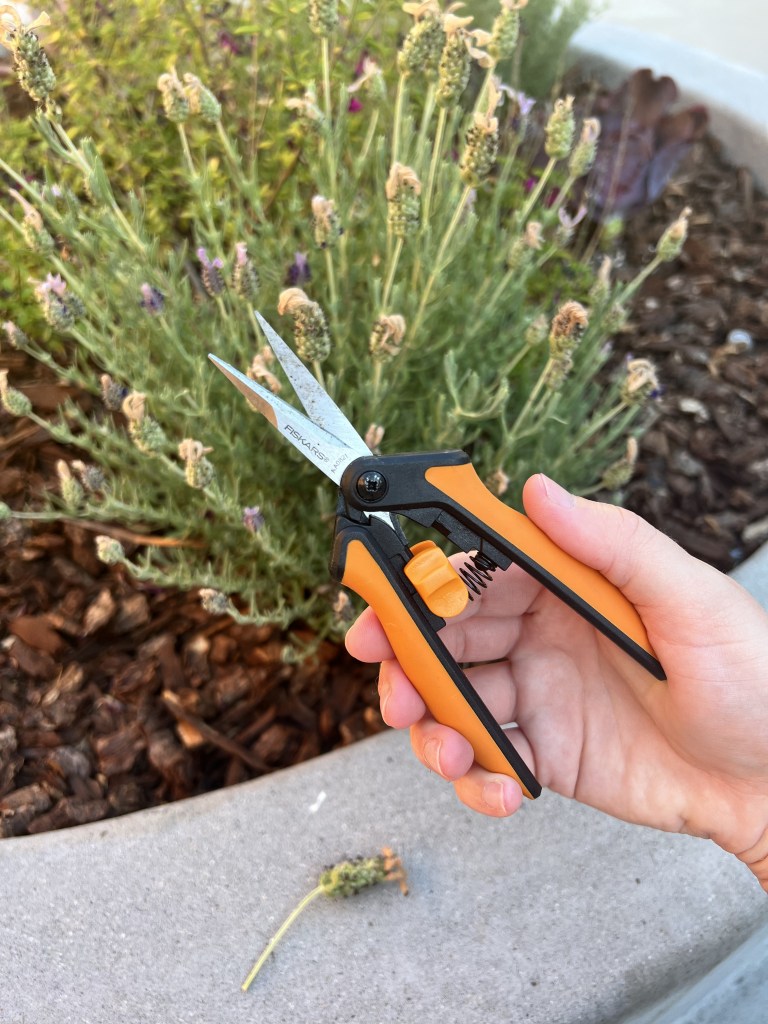
Step 2: Gather Your Tools Before you begin, gather your gardening essentials: a pair of sharp, clean pruning shears or scissors, a container to collect the spent flowers, and a pair of gloves to protect your hands. Having everything on hand ensures a smooth and efficient deadheading process.
Step 3: Identify Spent Flowers Examine your lavender plants closely and identify the stems that bear faded or browning flowers. Look for the point where the stem connects to the spent flower; this is where you’ll make your cut.
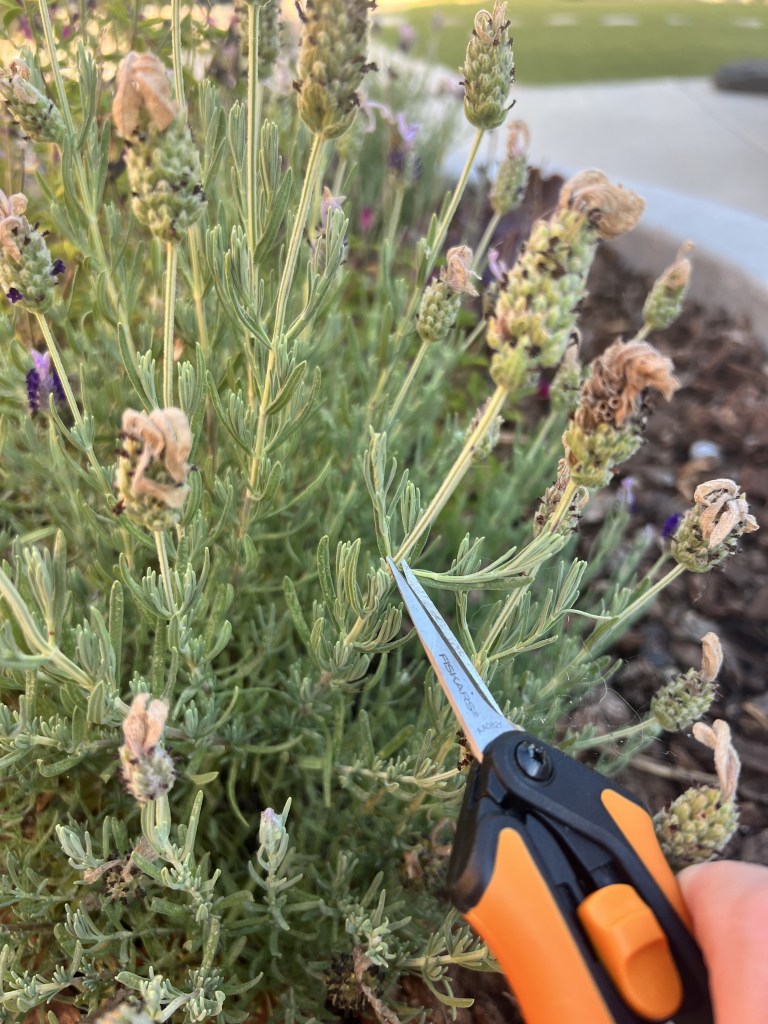
Step 4: Make Clean Cuts Hold the stem of the spent flower gently and trace your fingers down to the base of the stem until you find a set of healthy leaves or a node where new growth is emerging. Using your sharp pruning shears or scissors, make a clean, angled cut just above the leaf or node. This careful cut encourages new shoots to emerge from that point, leading to a bushier lavender plant.
Step 5: Collect Spent Flowers As you deadhead each lavender stem, drop the spent flowers into your container. This not only keeps your garden tidy but also prevents the accumulation of fading blooms that might attract pests or disease.
Step 6: Repeat the Process Continue deadheading all the faded flowers on your lavender plants, working your way around the garden. Remember to be gentle and patient, allowing yourself to fully engage with the soothing rhythm of the task.
Step 7: Dispose of Spent Flowers or Use Dried Once you’ve finished deadheading, dispose of the collected spent flowers. If they’re free from disease or pests, you can compost them. Otherwise, discard them in your regular waste.
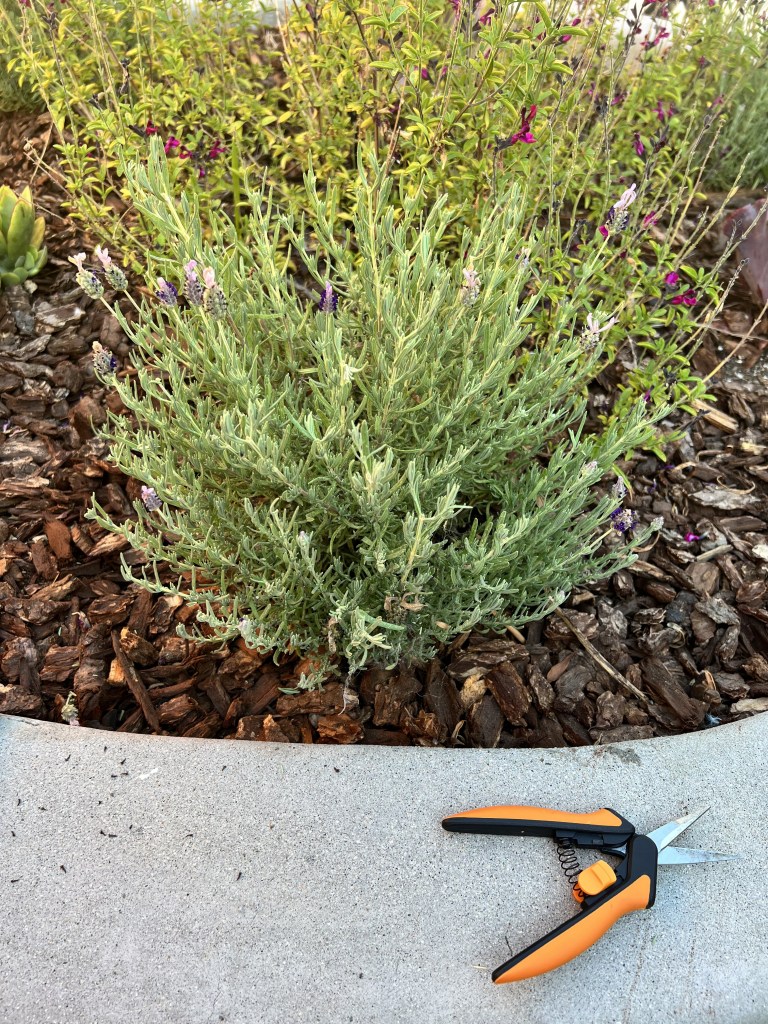
Mastering the art of deadheading lavender is a gratifying practice that not only maintains the visual allure of your garden but also nurtures the health of your plants. By following these steps, you’ll unleash the potential of your lavender plants, encouraging them to flourish with renewed vigor and grace. With each spent flower carefully snipped away, you’re creating space for new growth, extended blooming, and a garden that exudes timeless charm.
This post contains affiliate links.


 Simple Yards
Leave a comment